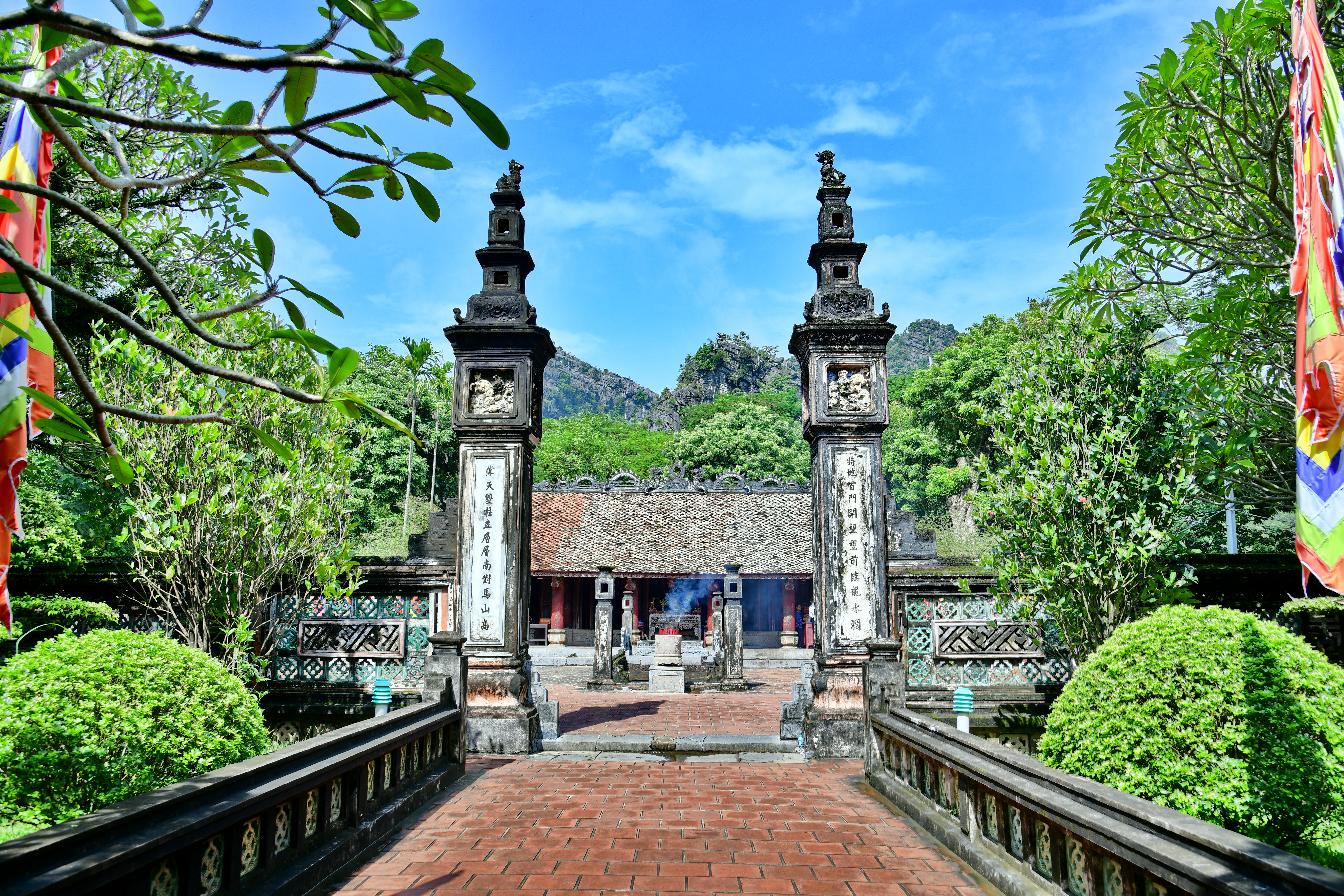
Temple of Literature Hanoi, or Van Mieu – Quoc Tu Giam, is a particularly important historical and cultural relic site in the capital of Hanoi. It is also a symbol of Vietnamese culture and intelligence. Hanoi Temple of Literature is known as the first university in Southeast Asia.
In recent years, the Temple of Literature has always been an attractive destination for tourists when they have the opportunity to visit Hanoi because of the unique architectural and historical value it brings.
Where is the Temple of Literature located?
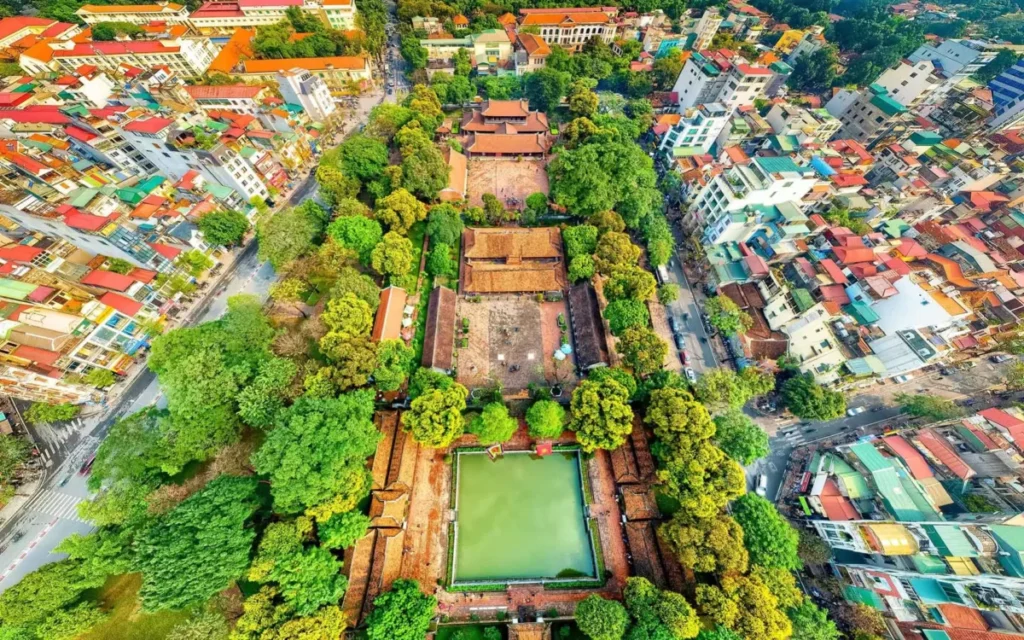
The Temple of Literature is located in the Dong Da district of Hanoi, near 4 main streets: Nguyen Thai Hoc, Ton Duc Thang, Van Mieu and Quoc Tu Giam. The entrance gate to the Temple of Literature is at no.58 Quoc Tu Giam, Dong Da, Hanoi. When traveling to a-thousand-year-of-civilization Hanoi, this is definitely the place you should visit.
Temple of Literature Vietnam History
Founding and Purpose: Founded in 1070 by Emperor Ly Thanh Tong, the Temple of Literature was initially dedicated to Confucius, the ancient Chinese philosopher. Later, it became Vietnam’s first university, known as the Imperial Academy, nurturing generations of scholars and intellectuals.
Surviving Trials: Withstanding wars and natural disasters, the temple has endured over 900 years, symbolizing the resilience of Vietnam’s cultural heritage. Its survival is a testament to the deep respect and reverence held for education and scholarship in Vietnamese culture.
Continual Reverence: Despite the passage of time, the Temple of Literature remains a place of reverence and learning, attracting students, scholars, and tourists alike. Its historical significance and architectural beauty continue to inspire and educate visitors from around the world.

>>> Hanoi Full Day A Private Tour With Mix of History and Activities
The architecture of the Temple of Literature
Van Mieu – Quoc Tu Giam covers an area of roughly 54,331 square meters and includes many diverse works such as Van Lake, Temple of Literature, Imperial Academy, Giam park, and Khue Van Pavilion. The campus’s exterior is adorned with layers of time-colored bricks, forming a striking architectural image.
The architecture of Van Mieu – Quoc Tu Giam reflects the royal court features of the Nguyen Dynasty, with a symmetrical structure along the North – South axis, creating an elegant and sophisticated appearance. Outstanding works in this relic complex include:
Van Lake and Giam Garden
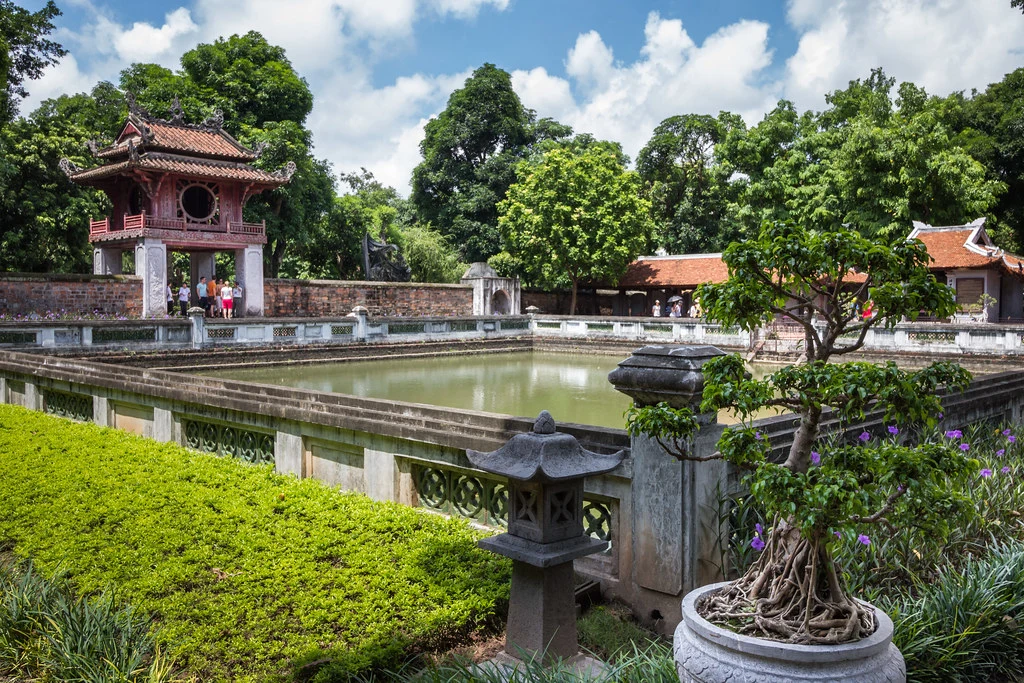
Van Lake, also known as Giam Lake or Minh Duong Lake, is located right in front of the main gate of the Temple of Literature relic site. The lake is large and in the middle of the lake is Kim Chau mound with a small shrine where students and intellectuals used to come to meet and exchange knowledge about literature and poetry.

Giam Garden, which is situated on the western wall of the Temple of Literature, has numerous miniatures as well as an octagonal house, a lake, and ornamental plants. This is the perfect spot to explore, relax and plan engaging cultural events.
Van Mieu Gate
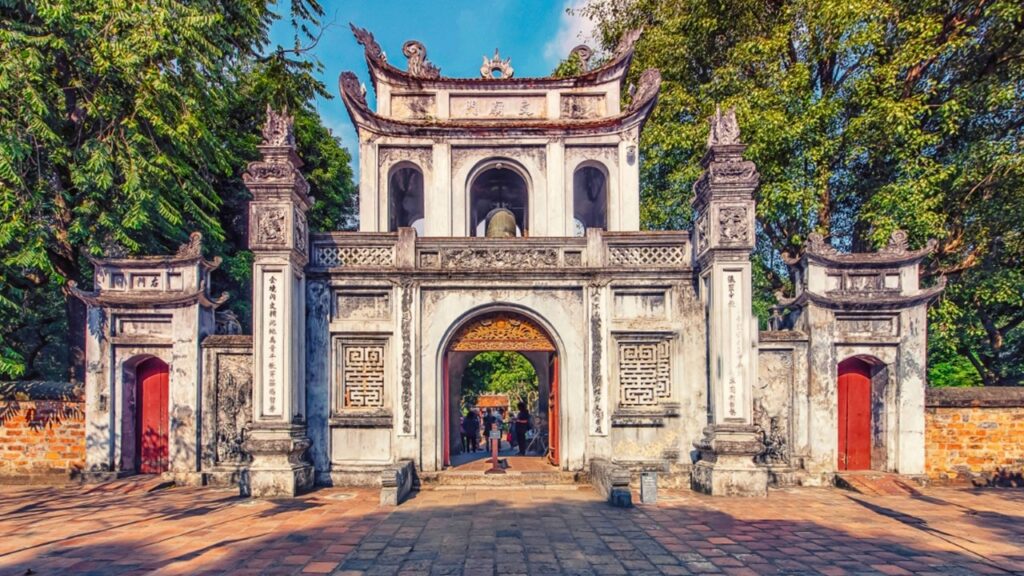
Van Mieu Gate is the three-entrance gate outside the Van Mieu – Quoc Tu Giam relic. The overall three-entrance gate has 3 doors with 2 stories, the upper one has 3 words “Van Mieu Gate” in ancient Chinese characters. In front of the Temple of Literature are two “Ha Ma” (Horse Dismounting) steles on both sides of four pillars.
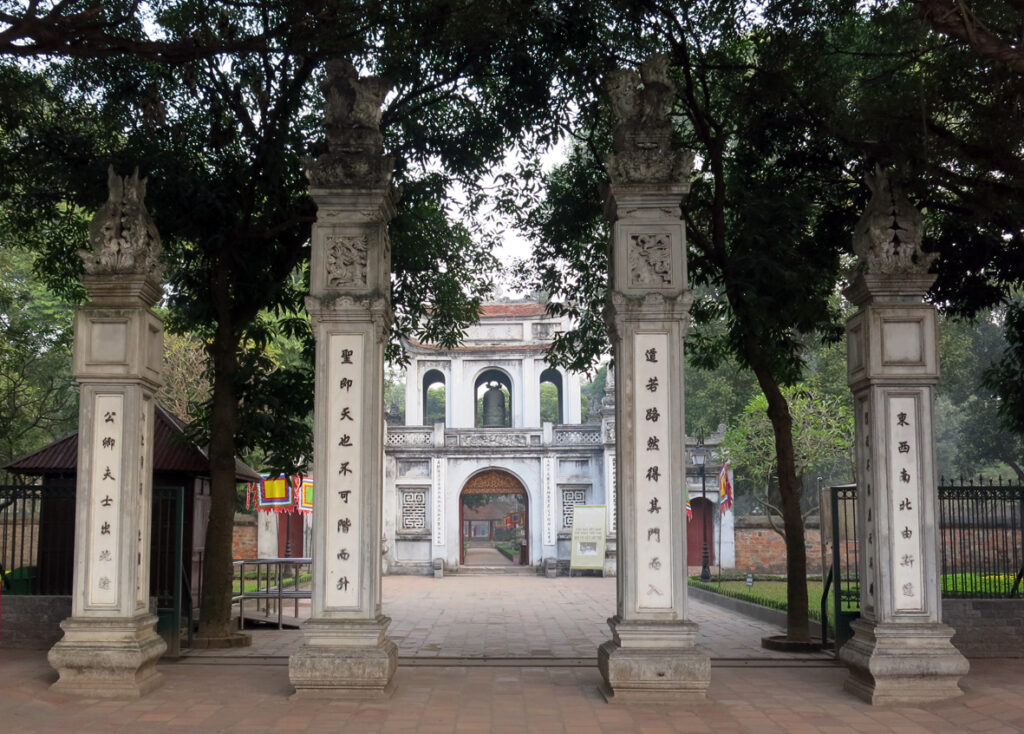
Legend has it that when passing through the Temple of Literature, regardless of your social ranking, you must dismount your horse, lower your hammock and walk, at least from one Ha Ma stele to the other. This demonstrates that the Temple of Literature is a solemn work and has great significance for feudal dynasties.
Dai Trung Mon – The Great Middle Gate
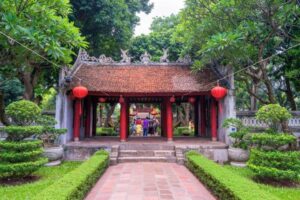
Dai Trung Mon is the second gate of the Temple of Literature, after passing Van Mieu Gate. The Great Middle Gate consists of 3 compartments, built on a high brick foundation and features a red shoe-shaped tiled roof in the style of an ancient communal house roof.
A large area with lakes, trees, and long parallel roads may be found in front and behind Dai Trung Mon. All create a solemn Van Mieu – Quoc Tu Giam but no less peaceful and elegant.
Khue Van Cac (Khue Van Pavilion) – A unique artistic structure
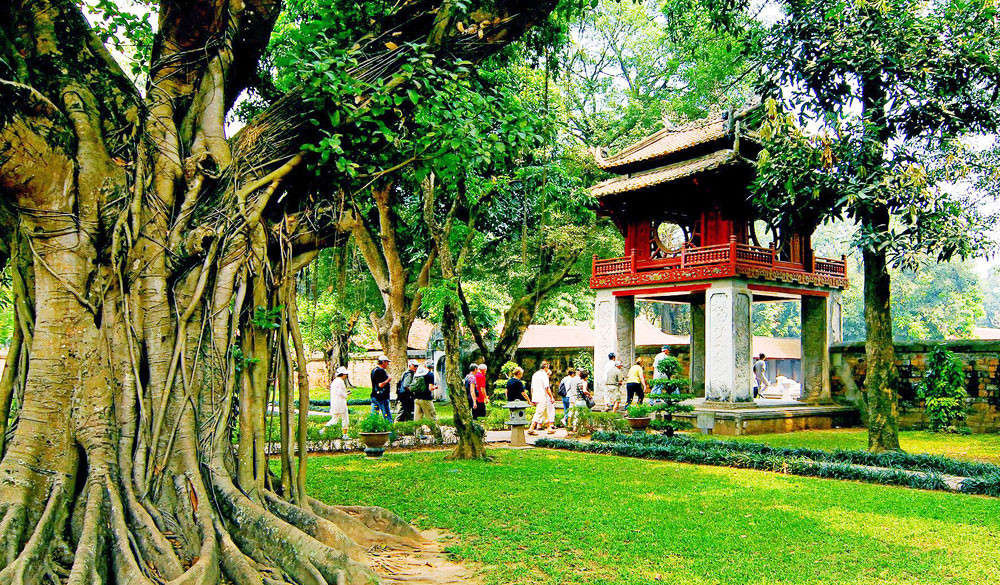
Khue Van Pavilion is a project built by Governor Nguyen Van Thanh in 1805, during the Nguyen Dynasty. This is a 2-floor structure, nearly 9 meters high and includes 4 square brick pillars supporting the upper attic. The structure is located on a square ground, each side length is about 6.8 meters.

Khue Van Cac impresses visitors with its extremely unique ancient-style architecture. Four square brick pillars on the lower level, adorned with elaborate carvings, support the upper floor. The upper story features an ornate red-painted architecture with two overlapping levels of red tile roofs, creating a unique eight-roof construction. The round windows on the attic wall, which resemble the sun or a blazing star, make a highlight for this structure.
Thien Quang Well (Well of Heavenly Clarity) & Garden of the Doctors’ Stelae
These are two works that tourists cannot miss when visiting the Van Mieu – Quoc Tu Giam. Thien Quang Well has a square shape, symbolizing the ground, and is located right behind Khue Van Cac. TheWell and Khue Van Cac represent the essence of heaven and earth gathered in the ancient cultural and educational center of Thang Long Imperial Capital.
Next to Thien Quang Well are two rows of large stone stele – Doctors’ stele. Each stele is a sculpture, both artistic and spiritually meaningful. There are 82 Doctor’s steles placed on the backs of 82 stone turtles with each stone stele containing information of 82 valedictorians in examinations through each feudal dynasty in Vietnam.
Dai Thanh Mon (Gate of Great Success) and Dai Bai Duong (House of Ceremony)

Located in the Van Mieu – Quoc Tu Giam relic complex, Dai Thanh Mon also has a similar structure to Dai Trung Mon. Passing Dai Thanh Mon, visitors will come to a large courtyard paved with Bat Trang stone, leading to the Dai Bai Duong area – the central area of Quoc Tu Giam.
Dai Bai Duong has a total of 9 rooms, 2 gable walls on both sides, the front and back are blank. In Dai Bai Duong, there is only an incense burner in the middle, the remaining rooms are all empty. This shrine area was used as a place for ceremonies during spring and autumn sacrifices in the past.
Khai Thanh Temple
Khai Thanh Temple is a building located at the last courtyard of the complex. The temple is a place to worship Confucius’s parents, Thuc Luong Ngot and Nhan Thi. Previously, this place used to be a residential area or Thai Hoc area with 150 rooms for students.
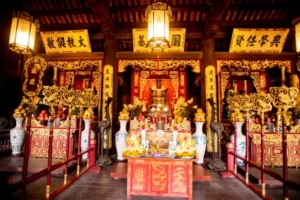
By 1946, the structure was completely destroyed after a cannon bombardment by the French colonialists. After that, Khai Thanh Temple was rebuilt and preserved until today.
Interesting Facts about the Hanoi Temple of Literature
– Ly Can Duc, who became King Ly Nhan Tong, was the first pupil at the Imperial Academy – Vietnam’s first university.
– The Literature Temple on the second floor of the Imperial Academy a sanctum devote to the adoration of the three kings: Ly Thanh Tong, Ly Nhan Tong, and Le Thanh Tong.
– Confucius, Chou Kung (Duke of Chou), and Chu Van An are the three most revered worshippers at the Literature Temple.
– In 2021, UNESCO recognized 82 Doctors’ Stelae as part of the world’s documented history and added it to the International Register of Memory of the World UNESCO
 For individuals who are interested in learning about Vietnamese historical and cultural values, Temple of Literature in Hanoi is a should-not-miss destination. Furthermore, this will be an intriguing experience as you go to and discover the beautiful capital. Hopefully the information that Vietnam Stunning Travel has just shared will help you gain more understanding and knowledge about this meaningful site.